ServicesEntry Doors
Entry Doors in Mukilteo
We replace worn, drafty and leaking front doors with prehung fiberglass, steel and wood units set on a properly flashed sill. Before you choose, we compare what each door costs to buy against how long it lasts and how much care it needs.
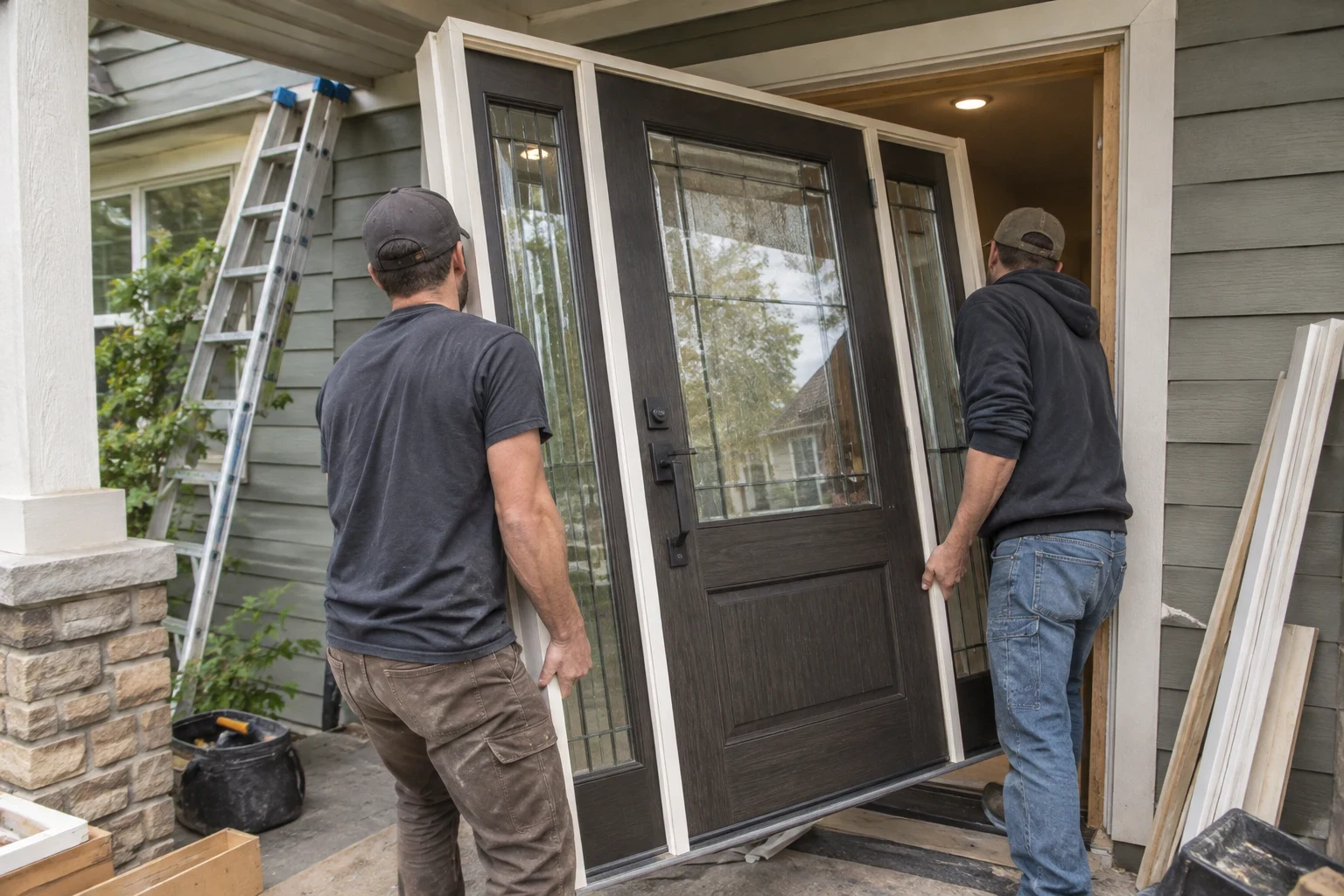
Replace the door, or just tune it up
What you see from the porch is only the slab. Behind it sit the jamb and brickmold, the threshold and sill, the weatherstrip, and the hinges and strike that hold everything tight. When the slab is solid and the problem is a worn sweep or flattened weatherstrip, a tune-up is often all you need, and we will say so. When the jamb has rotted at its bottom corners, the slab has warped, or the latch only catches with a shove, a complete prehung unit usually costs less over the next twenty years than patching the old one every few winters.
Our quotes look at the full life of the door, not only the install bill. Painted wood has a warm look, but on a wall that faces the weather it needs sanding and refinishing every few years. Steel is strong and budget-friendly, yet it dents, and scratches in the skin can rust in salty marine air. Fiberglass is the higher up-front spend, but it holds paint or stain and will not swell, rot or rust. We put those trade-offs next to each other so your choice still holds up a decade from now.
Our company is licensed, insured and bonded, and every install we do is backed by a 10-year workmanship warranty.
What an entry door installation includes
- Tear-out to the rough opening
- We remove the old slab, jamb and exterior trim and check the framing and subfloor underneath. Soft wood under the sill is common on older doors. We photograph whatever we find and show you before anything gets covered back up.
- Sill pan and flashing
- Most door leaks start at the threshold. We set a sill pan sloped to the outside and lap flashing into the weather barrier. Any water that gets past the threshold then drains out instead of soaking the subfloor.
- A prehung unit set plumb and square
- We shim the frame at the hinges and the strike. Long screws go through the top hinge into the framing so the slab cannot sag over time. Low-expansion foam fills the gap without bowing the jamb.
- Weatherstrip, sweep and threshold adjustment
- We adjust the threshold so the sweep makes even contact along its full length. We also check that the compression weatherstrip seals all the way around. When the door is closed, you should not see any daylight.
- Hardware that actually resists a kick
- Deadbolt strike plates get long screws that reach the stud, not just the jamb. Multipoint locks are available on many slabs. They latch at the top, middle and bottom, which also helps keep tall doors from bowing.
- Trim, sealant and cleanup
- New brickmold and interior casing are fitted and sealed. We haul away the old door and frame.
Signs your entry door is ready to go
Drafts or daylight at the edges
Weatherstrip that no longer touches the slab usually means the slab has warped or the frame has shifted. New seals rarely fix that for long.
Dark or soft wood at the jamb bottom
Water wicks into the end grain where the jamb meets the sill. Once a screwdriver sinks in, the rot has usually reached the subfloor too.
Sticking, dragging or a stubborn latch
Seasonal swelling in a wood slab, or a sagging hinge side, throws off the reveal. Planing it buys time. A swollen core keeps moving, though.
Fog between the glass in the door lite
A failed seal in the decorative glass cannot be cleared. Some lites can be swapped, but on an older slab replacing the full door is often the better spend.
A finish you redo every couple of years
Peeling and graying on a wood door shows the finish is losing to sun and rain. That upkeep cost belongs in the comparison with fiberglass.
Where the money goes on a door replacement
The price of a new door depends less on how it looks and more on what it is made of and what we find under the old threshold. We break the quote into line items so you can see each cost and compare it with how many years that choice should last. Flexible payment options are available.
Slab material and core
Wood, steel and fiberglass each start at different price points. A foam-insulated core costs more than a hollow or wood-stile core, but it holds heat better through a long, damp winter.
Glass and sidelites
Decorative lites, sidelites and transoms add glass units and extra framing. Low-E or privacy glass raises the price again.
Condition of the sill and framing
Rotted subfloor or jamb studs have to be repaired before the new unit goes in. We cannot see the full extent until the old frame is out, so we show you the damage before doing that work.
Opening size changes
Widening an opening or adding sidelites means a new header and usually a permit. Keeping the existing size avoids both costs.
Hardware and finish
Multipoint locks, smart deadbolts and factory-applied stain cost more on day one. They also reduce later adjustment and refinishing.
How the job runs from first call to final latch
- 1
A no-pressure consultation
You tell us what bothers you about the current door, and we ask about style, glass and budget. Your free quote starts with that phone call.
- 2
Measuring and ordering
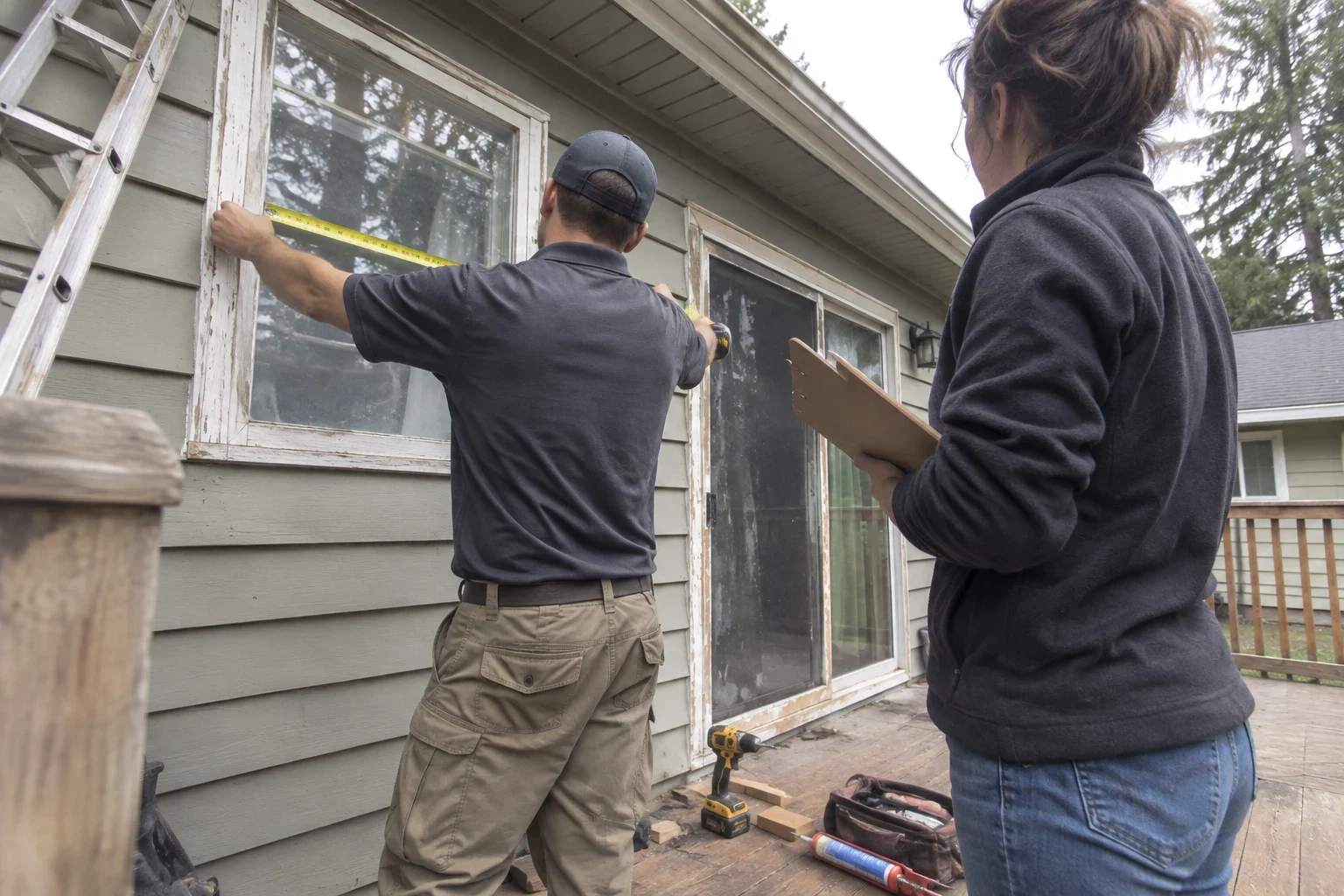
We measure the rough opening, check the sill and framing, and write up the options with their upkeep differences. Once you choose, we order a prehung unit sized to your opening.
- 3
Install day
We lay down floor protection and pull the old door. Then we flash the sill, set and adjust the new unit, and fit the trim. Most installs finished in a single day, so your home is locked up again by evening.
- 4
Walkthrough
We open and close the door with you, test every lock, and show you how to adjust the threshold as the seasons change.
Entry door questions we hear often
Should I choose fiberglass or steel?
Steel costs less and is very secure, but dents are hard to repair and scratches can rust. Fiberglass costs more, resists dents better and will not rust or rot. It can also take a wood-grain stain. On a door that takes direct weather, fiberglass usually wins over its lifespan.
Can you replace just the slab and keep my frame?
Sometimes, if the jamb is solid and square. Most older frames have some rot or settling, though, and a new slab in an out-of-square frame will not seal well. We check the frame during the consultation and give you a straight answer.
Does a new entry door need a permit?
Swapping a door in the same opening usually does not. Changing the opening size or the header usually does, and in that case we pull the permit and schedule the inspection.
How long will my home be without a door?
Only during install hours. The old door comes out and the new one goes in the same day, so you are never left with an open doorway overnight.
What does your warranty cover?
Our 10-year workmanship warranty covers the installation, including the setting, flashing, adjustment and trim work we do. The door itself is covered by its manufacturer, and we go over that coverage with you before you order.
Can you add a storm door at the same time?
Yes. A storm door can protect a wood entry door from rain and sun and extend its finish life. See our Storm Doors page for the options.
Find the door that pays off over time
Tell us about your current door and we will walk through materials, glass and hardware with their upkeep in plain view. We serve Mukilteo, Lynnwood, Mill Creek, Everett and nearby.