ServicesPatio Doors
Patio Door Replacement in Mukilteo
Licensed, insured and bonded, we install sliding and hinged patio doors that roll smoothly, latch on the first try and shed water away from your floor. You see each frame and glass choice priced next to its expected lifespan and upkeep, so the door you pick still makes sense years from now.
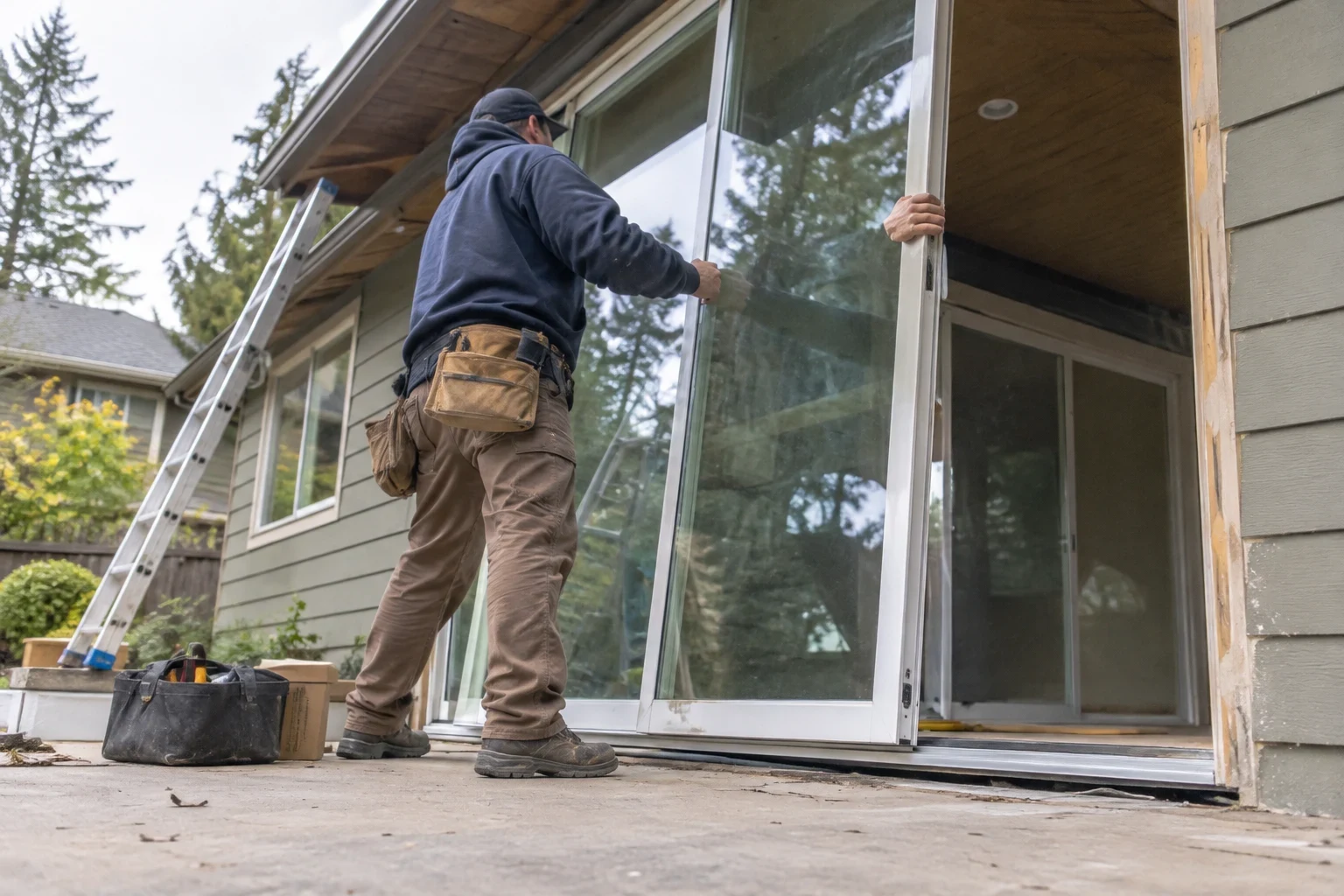
A patio door is the hardest-working opening in your home
A patio door is a big pane of tempered glass on rollers, opened several times a day, sitting on a sill that takes every drip off the deck. Most failures start at the parts you never look at: nylon rollers that flatten, a bottom track that wears a groove, weatherstripping that compresses, and a sill with no pan flashing under it.
We help you decide between a vinyl, fiberglass or aluminum-clad unit by comparing the purchase price against expected service life and upkeep. A cheaper door that needs new rollers and seals every few years can cost more over time than a stiffer frame with stainless rollers. We are licensed, insured and bonded, and we put the numbers side by side so the choice still makes sense a decade from now.
What your patio door installation covers
Opening checked for square
We size the new door from the framed opening itself and check it with a level and diagonal measurements. A racked opening is a common reason sliders bind, so we catch it before the order goes in.
Frame and glass choices
We compare vinyl, fiberglass and clad frames along with low-E coatings and argon-filled insulated glass. All door glass we install is tempered, which code requires for glazing in doors.
Sloped sill pan
A pan with a back dam goes under the threshold, so water that slips past the seals is directed outside. It protects your subfloor far better than a bead of caulk.
Rollers, handles and locks
Hardware is matched to the weight of each panel. On hinged doors, a multipoint lock draws the panel against the weatherstripping at several points, top to bottom.
Insulation and trim
Low-expansion foam fills the shim space without bowing the frame. We then finish the interior trim and seal the exterior perimeter.
Haul-away
The old door leaves with us, and we clean up the work area before we go.
When a patio door is ready to be replaced
Heavy, jerky sliding
Flattened nylon rollers or a worn track make a panel drag or hop. New rollers may help for a while, but a grooved aluminum track tends to wear them out again.
Cloudy glass that won't wipe clean
Haze or droplets trapped between the panes mean the edge seal on the insulated glass has broken and the gas fill has escaped. Cleaning won't fix it, because the moisture is inside the unit.
Damp floor near the threshold
Dark stains, spongy flooring or swollen trim by the sill usually trace back to missing or failed sill flashing. Through a long wet fall and winter, that slow leak keeps feeding rot below.
Air moving where panels meet
A draft at the center stile means the interlock weatherstrip has worn down or the panels have drifted out of line.
A lock you have to force
If you have to lift or push the panel before the latch engages, the frame has likely shifted or sagged out of position.
How the job runs
- 1
Free in-home consultation
We measure, check the sill and floor for soft spots, and talk through how you use the door. You get a written quote with each option priced and its expected upkeep explained.
- 2
Ordering your door
Patio doors are built to size. We confirm the final measurements and order the unit, then schedule your install once it arrives.
- 3
Install day
Most installs finished in a single day. We cover floors, remove the old panels and frame, repair any damaged sill framing we uncovered, set the sill pan, then shim, level and fasten the new frame.
- 4
Adjustment and walkthrough
We adjust rollers and strikes until the panel glides and latches with one hand, then show you how to keep the track clean.
What drives the cost of a new patio door
Patio door quotes vary because they often describe different products and different amounts of prep at the sill. Our written quote breaks out each part, so you can see what you pay for now and how long each choice should last. Flexible payment options are available.
- Panel count and operation
- A basic two-panel slider costs less than a three- or four-panel unit, and a hinged French pair needs more hardware and a different frame. More panels mean more rollers, more interlocks and more seals to maintain later.
- Frame material
- Vinyl has the lowest purchase price. Fiberglass and clad frames cost more, but they move less with temperature swings, so the rollers stay on their track and the weatherstripping stays compressed evenly for longer.
- Glass package
- Low-E coatings, argon fill and triple-pane units raise the price. On a door that may be the largest glass area in your home, they also cut heat loss every winter you own it.
- Condition under the threshold
- Soft sill plates or a rotted subfloor must be rebuilt before a new frame can sit on them. If we uncover damage, we photograph it and price the repair before going further.
- Reframing the wall
- Going wider, or converting a slider to a swinging door, can call for new studs and a larger header over the opening. That structural work adds labor and material, and we price it as its own line.
Patio door questions
Something not covered here? (425) 842-2596
Can my slider just get new rollers instead?
Sometimes. If the frame is square, the glass is clear and the bottom track still has a smooth profile, new rollers and weatherstripping can extend its life by years. If a repair is the better value, we will say so and point you to our window repair service.
Is fiberglass worth the extra cost over vinyl?
On a large door it often is. Vinyl expands and contracts more as temperatures change, and that movement gradually loosens the seals. Fiberglass holds its shape, so panels stay aligned and weatherstripping wears more slowly.
Can you replace a slider with French doors?
In most homes, yes. A hinged pair needs clear swing room on one side, and the opening may need new framing. We look at both during the consultation and price them separately.
How long will the work take?
Most installs finished in a single day. If we find rot in the sill or subfloor, the repair can add time, and we explain how much before any work starts.
What happens if something goes wrong after installation?
Our 10-year workmanship warranty covers the installation itself, including the flashing, fastening and adjustment we do. The manufacturer covers the door unit under its own terms, and we review that coverage with you at the walkthrough.
Choose a door you'll still like in twenty years
We'll measure the opening, check the sill and price each option against its lifespan. The quote is free and there's no pressure.